News
CT CPCU Board Update - Welcome Bhaskar & Congratulations Karen!
Dear CT CPCU Chapter Members,
We are pleased to share an exciting update from the CT CPCU Chapter Board of Directors.
We are delighted to welcome Delli “Bhaskar” Jagadeesan as our new Director of Membership. Bhaskar is a fantastic addition to the team and brings tremendous energy, enthusiasm, and passion for the CPCU community. You’ll have an opportunity to meet him at In2Risk, where he will be presenting at not one but two seminars.
At the same time, our current Director of Membership, Karen Kirklin, will be transitioning into the Vice President role. In this new capacity, Karen will help plan next year’s events and will serve as Vice President throughout the coming year, continuing her strong leadership and dedication to our chapter.
Please join me in congratulating Bhaskar on his new role as Director of Membership and Karen on her transition to Vice President. We are excited about what their leadership will bring to the CT CPCU Chapter.
Sincerely,
Patty Havens
President, CT CPCU Society Chapter
2026 CT Chapter Conferment Chair
Dear CT CPCU Society Chapter Board Members,
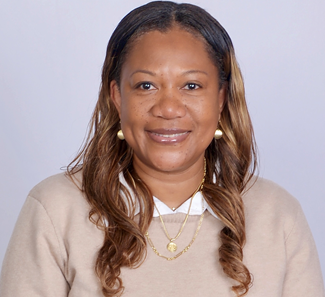
I am delighted to announce that Elita Lilly has joined our CT Chapter Board as Conferment Chair for 2026!
Please join me in giving Elita a warm welcome!
Elita is a Senior Audit Attorney with the Bill Review IQ division of Sedgwick Claims Management Services. Elita has over 25+ years of insurance industry experience as in-house counsel adjusting directors & officers, errors & omissions, employment practices liability and securities claims, as well as auditing attorney invoices for insurers. She has been a Board Member of the CT State Insurance and Risk Management Board (2008/2009). She earned her CPCU in 2012 and presented at the first Claims and Litigation Management Alliance (CLM) first Claims College on the issue of settlement agreements at mediation in 2015. Elita is also a member of the CPCU’s Claims Interest Group and enjoys participating in the CPCU’s Professional Growth book club. She is a new dog owner of a 3-year-old mini goldendoodle. Elita lives in Cheshire, CT with her husband and two daughters.
Welcome aboard, Elita! We're thrilled to have you!
2026 Events Calendar
The 2026 CT Chapter CPCU calendar offers a full year of learning, recognition, and community—most events are free to CT CPCU members. It blends formal education with hands‑on networking so insurance professionals at every stage can sharpen skills and expand connections.
The year kicks off in January with the Chapter Leadership Planning Meeting, setting priorities and initiatives. February’s Insurance Trivia Night at Parkville Market (Tue 2/10, 5–7 pm) brings members together in a relaxed setting to test knowledge and meet peers. In March, the Emerging Trends Ethics Webinar (Wed 3/18, 12–1 pm) features Rita Williams‑Bogar and focuses on ethical decision‑making—an essential capability for underwriters, claims professionals, brokers, and risk managers alike.
Spring deepens both learning and leadership. April includes In2Leadership in Nashville (4/29–30), the 2nd‑quarter Speaker Series (Wed 4/22), and a Good Works volunteer event (TBD). May’s I‑DAY at the Windsor Marriott (Tue 5/12, 8 am–3 pm) provides CE credit and a concentrated dose of market updates. June adds a Chapter Leaders Midyear Dinner (Wed 6/3) and participation in the West Hartford Pride Festival (Sat 6/27), reinforcing the chapter’s commitment to inclusion and community presence.
After a breather in July, August celebrates members with a Volunteer Appreciation and CPCU Social at GATHER55 (Wed 8/12, 5–7 pm). September is packed: a New Designee Happy Hour (Wed 9/9, 5–7 pm), the 3rd‑quarter Speaker Series (Wed 9/16), and the annual Golf Tournament at Wampanoag in West Hartford (Tue 9/22). October features In2RISK in Las Vegas (10/19–21) and the 4th‑quarter Speaker Series (TBD). The chapter then recognizes new CPCUs at the Conferment Ceremony at The Pond House Café, West Hartford (Thu 11/12, 5–8 pm), and closes the year with the Annual Meeting (Wed 12/2, 5–8 pm; location TBD).
Why these events matter:
- Continuous learning: Ethics, leadership, and market trend sessions translate into better decisions, improved client outcomes, and reduced organizational risk.
- Networking that works: Repeated touchpoints—speaker series, socials, golf, and conferences—build real relationships that lead to mentoring, collaboration, and career opportunities.
- Recognition and belonging: New designee and conferment events celebrate achievements, while volunteer appreciation and community activities strengthen chapter culture.
- Career momentum: I‑DAY’s CE credit and national conferences like In2RISK keep professionals current on regulation, technology, and emerging exposures.
How to get the most value:
- Attend at least one event each quarter to maintain a strong network and steady learning cadence.
- Bring a colleague or a new designee to expand perspectives.
- Volunteer at the Good Works event or help host a speaker session to build visibility and leadership skills.
- Follow up with people you meet—schedule a coffee, share an article, or explore a problem together.
With a thoughtful mix of education, service, and connection, the CT Chapter CPCU’s 2026 calendar is designed to help insurance professionals grow, contribute, and thrive. Mark the dates, watch for the TBD updates, and make this year a turning point for your learning and network.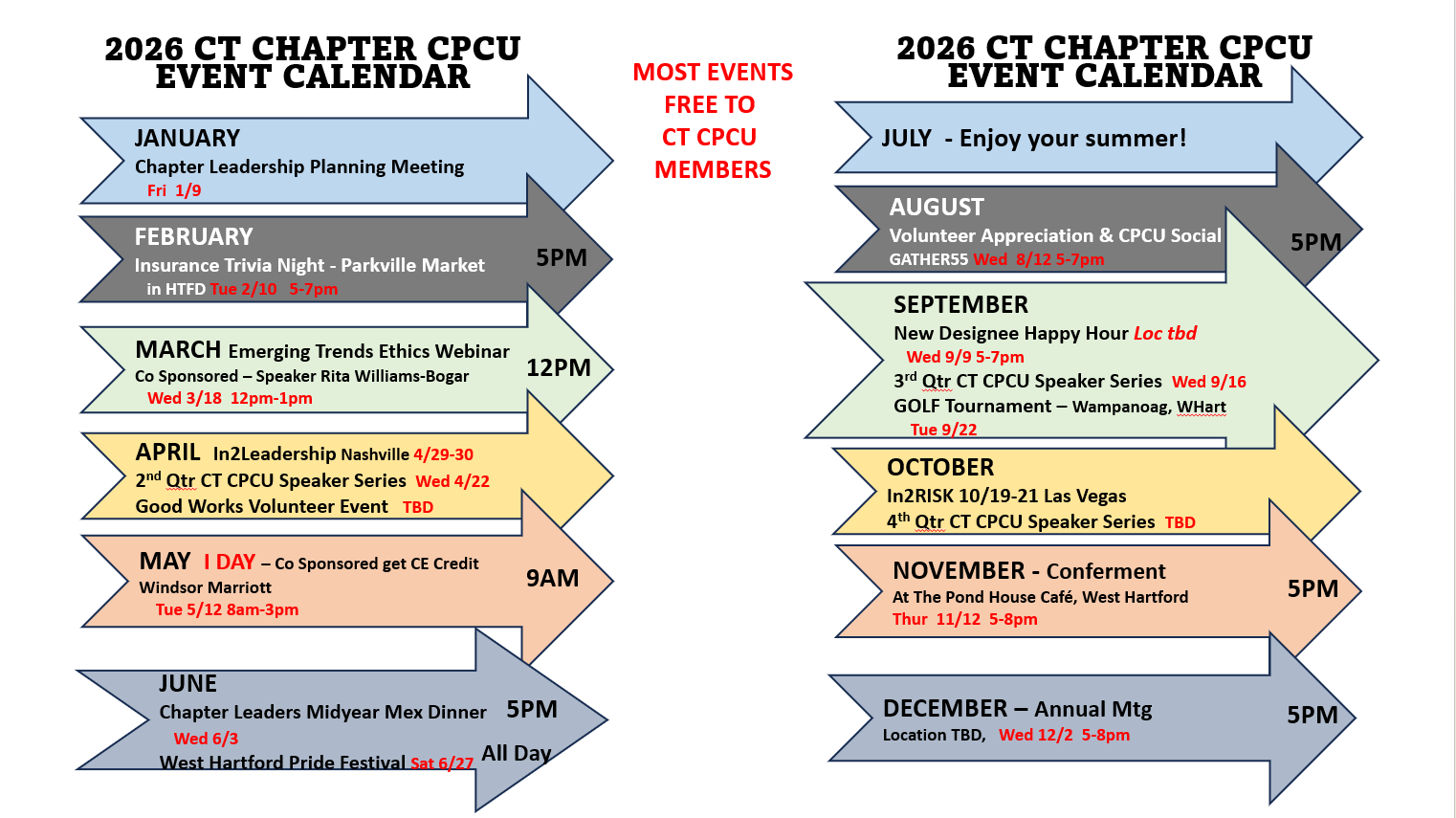
2025 CT CPCU Chaptergram Second Edition
2025 CT CPCU Chaptergram Second Edition Check out our latest Chaptergram now available!
2025 CT CPCU Chaptergram 2nd Edition
2023 Circle of Excellence
 The Connecticut Chapter has earned the Circle of Excellence for 2023.
The Connecticut Chapter earned this award by providing relevant knowledge and empowering professionals to succeed in our organization. This is the highest award a chapter can receive. To those who served in 2023 -- thank you for your dedication, your time and your resolve.
2024 CT CPCU Chaptergram First Edition
Check out our latest Chaptergram now available!
2024 CT CPCU Chaptergram First Edition
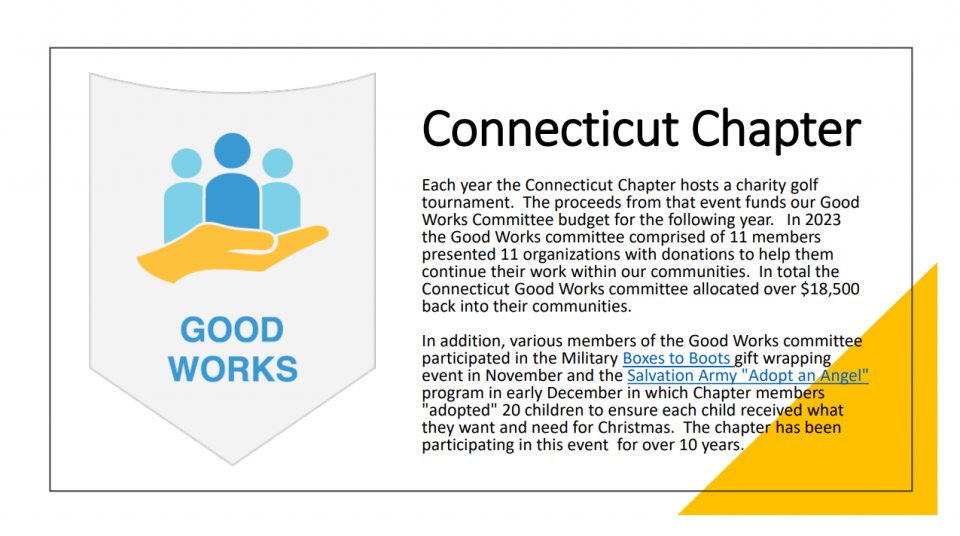
2023 Connecticut Chapter Good Works
Justin Moulton appointed to the CPCU National Nominating Committee
 Congratulations to Justin for progressing to a leadership role in the national CPCU Society. He was recently appointed as a member of the National Nominating Committee. Justin previously moved up the leadership ranks of the Connecticut CPCU chapter and currently serves as the Immediate Past President.
In his national role, Justin will serve with eight other CPCUs on the committee which is charged with nominating members to the Society’s Leadership Council, Leadership Council Officers, Chapter Governors, and Interest Group Governors. He will be involved with evaluating and assessing prospective Leadership Council members and officers to fill vacancies, ensuring the council has the right talent mix in terms of energy, skills, perspectives and diversity to address the needs of the organization. The committee also works with the Leadership Council, Society Staff, and other appropriate committees to develop strategies to strengthen relationships with prospective future leaders to help ensure a robust pipeline for the Nominating Committee to consider.
The Connecticut Chapter is extremely proud of Justin and wish him luck in his new role.
CT Chapter Featured In The Standard
By Deb Bartucca
We were happy to have Deborah Dukeshire, editor of The Standard as a guest at our April Chapter meeting.
Deborah featured the presentation "Third Party Data, Cloud Technology and Geospatial Technology, and How the Three Elements of Data Analytics Are Related", in the May 3rd issue of The Standard.
We encourage you to read the article (which starts on page 7), as well as the other New England insurance industry news.